If you wake up tired, snore, or have been told you stop breathing at night, we can help you get answers without waiting nine months for a specialist appointment.
What sleep apnea screening looks like at our office
Why the dental office is a logical place to start
Worn-down teeth, scalloped tongue edges, a small or crowded airway on a 3D scan, jaw tension, morning headaches these are often the first physical signs of disrupted breathing at night. We see them in dental exams long before most patients connect the dots. Catching them early means catching airway problems before they affect heart health, blood pressure, and quality of life.
The 9-month wait and why we screen here
In Charleston, getting in to see a sleep neurologist can take nine months or more. That is a long time to keep waking up exhausted. By screening here first, we can help you decide whether a sleep study is the right next step, refer you to the right specialist, and shorten the path to actual treatment.
What we use to evaluate
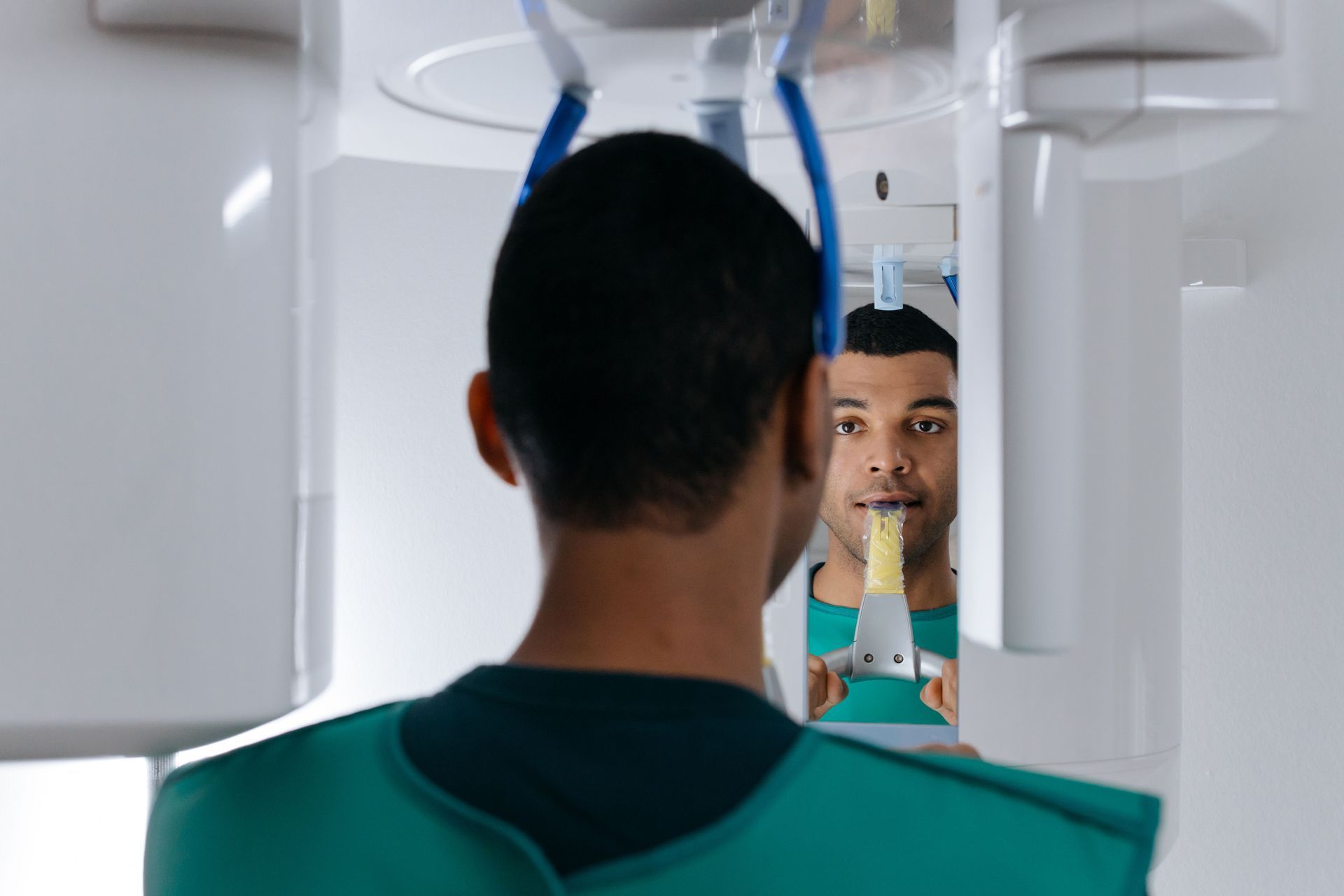
A CBCT 3D scan of the airway, an intraoral exam looking for grinding patterns and tongue position, a careful review of symptoms, and questions about sleep, energy, and snoring. If the picture suggests sleep apnea, we coordinate the referral. If the issue is something we can treat with an oral appliance, we can move forward here.
What is sleep apnea screening?
Sleep apnea screening is an evaluation of the physical signs and symptoms that suggest you may have a breathing disorder during sleep. It is not a diagnosis that requires a sleep study with a sleep physician. At Tatum Dentistry, we screen for the signs in your mouth, jaw, and airway, and refer to sleep specialists for formal testing.
Does sleep apnea screening hurt?
No. Screening involves looking, asking questions, and possibly taking a 3D scan of your airway with the CBCT. None of it is invasive. The CBCT scan takes about 20 seconds, you stand still, and you are done.
How long does the screening take?
The screening itself adds only a few minutes to your dental exam. If we recommend a CBCT or further evaluation, plan for an extra 15 to 20 minutes. If we see signs that warrant a sleep study, we will coordinate the referral and walk you through what to expect.
See Why Charleston Loves Us
➔ Two kind and highly-skilled dentists
➔ Decades of experience
➔ A team that’s been together a long time
➔ Personal care with your comfort in mind
Frequently Asked Questions
I think I might have sleep apnea — should I see a dentist or a doctor?
Either works as a starting point, but if your physician has a long wait, a dental screening can help you get a quicker read on whether you should pursue a sleep study. We see signs in the mouth that physicians often do not look for. Then we coordinate care from there.
Will you treat my sleep apnea with an oral appliance?
Sometimes. Oral appliances are a good option for snoring and for mild to moderate sleep apnea — and for patients who cannot tolerate a CPAP. Severe cases usually need CPAP or other medical treatment. After a sleep study confirms the diagnosis, we can decide together whether an oral appliance is right for you.
My partner says I snore — does that mean I have sleep apnea?
Not necessarily. Snoring can be a sign of sleep apnea, but plenty of people snore without having it. The only way to know is a sleep study. If you snore and also wake up tired, have morning headaches, or have been told you stop breathing at night, screening is a good idea.
Discover Fun Dental Tips & Tricks!
From Our Blog We write about smile makeovers we have done, what to expect from veneers, why whitening should come first, and how to know which option fits your goals.